Choosing fish for a planted aquarium involves more than picking what looks attractive. The species you select affect plant health, water clarity, and the overall balance of your tank. Some fish uproot plants, others eat them, and certain species produce bioload that can fuel algae growth. This guide covers the most reliable choices for aquascaped tanks in Singapore, with practical notes on temperature tolerance given our tropical climate.
Neon Tetra (Paracheirodon innesi)

The Neon Tetra remains one of the most popular choices for planted tanks worldwide, and for good reason. Its iridescent blue stripe contrasts beautifully against green foliage, and a school of 15 or more creates a compelling sense of movement without overwhelming the layout.
Care essentials
- Temperature range: 22-26 degrees Celsius (may need a chiller in Singapore)
- pH: 6.0-7.0, soft to slightly acidic water preferred
- Minimum school size: 10, ideally 15+
- Tank size: 60cm and above
- Diet: micro pellets, crushed flake food, frozen daphnia
One concern in Singapore is temperature. Neon Tetras prefer cooler water than our ambient room temperature typically provides. If your room stays above 28 degrees, consider a small fan or chiller unit. Many local hobbyists run air conditioning in their fish rooms to maintain stable temperatures year-round.
Cardinal Tetra (Paracheirodon axelrodi)

Often confused with the Neon Tetra, the Cardinal Tetra features a red stripe that extends the full length of its body rather than just the rear half. Cardinals tolerate slightly warmer water, making them a better fit for Singapore's climate without cooling equipment.
Key differences from Neon Tetras
- Red stripe covers the entire lower body, not just the tail section
- Temperature tolerance up to 28 degrees Celsius
- Generally more expensive but widely available in Singapore
- Slightly more sensitive to water parameter swings
Betta (Betta splendens)

Bettas are deeply connected to Southeast Asian aquaculture, and Singapore has a strong Betta breeding community. For planted tanks, a single male Betta can serve as a striking centrepiece fish. Their flowing fins create elegant movement, and they rarely disturb plant arrangements.
Planted tank considerations
- Keep only one male per tank; females can be kept in sorority groups of 5+
- Avoid strong water flow, which stresses their long fins
- Temperature: 24-30 degrees, well-suited to Singapore conditions
- Provide surface access for labyrinth organ breathing
- Compatible with snails, Corydoras, and small peaceful species
Local Betta shops in Singapore, particularly around Toa Payoh and Serangoon, offer wild-type and selectively bred varieties. Wild-type Bettas (Betta imbellis, Betta smaragdina) make excellent choices for biotope-style planted tanks.
Discus (Symphysodon)
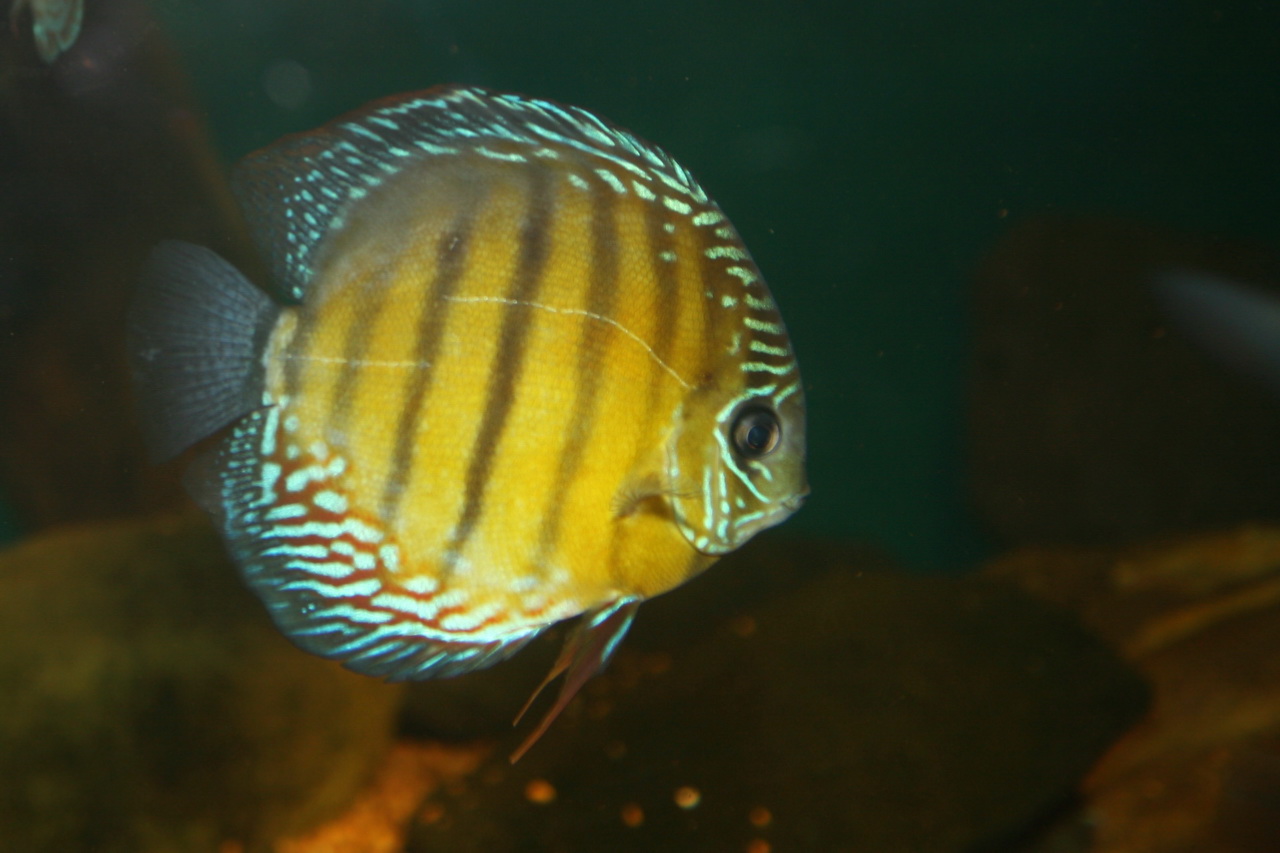
Discus are often called the "king of the aquarium" and represent a step up in commitment. They require larger tanks (minimum 200 litres), pristine water quality, and a carefully managed diet. However, a group of Discus in a well-planted tank is among the most visually stunning setups possible.
What to know before keeping Discus
- Temperature: 28-31 degrees, which aligns well with Singapore's climate
- Minimum group size: 5-6 to reduce aggression
- Sensitive to nitrate levels; frequent water changes essential
- High-protein diet required: beef heart, bloodworms, quality pellets
- Plant compatibility: choose heat-tolerant species like Anubias and Vallisneria
Cherry Shrimp (Neocaridina davidi)

Cherry Shrimp are arguably the most useful inhabitants in a planted tank. They graze on biofilm and soft algae continuously, helping to keep hardscape and plant leaves clean. Their small size means minimal bioload, and their breeding rate in established tanks provides a self-sustaining population.
Grades and colours
- Cherry (low-grade red), Sakura (medium red), Fire Red, Painted Fire Red
- Other colour variants: Blue Dream, Yellow, Orange, Black Rose
- Higher-grade shrimp command premium prices but behave identically
- All Neocaridina colour variants can interbreed, reverting to wild colouring
Singapore's shrimp hobby scene is particularly active, with dedicated Facebook groups and Carousell listings for trading colonies. Keep shrimp in tanks without large predatory fish; even moderately sized tetras can eat juvenile shrimp.
Guppy (Poecilia reticulata)

Guppies thrive in Singapore's water conditions and are one of the easiest fish to keep in planted tanks. Males display vibrant tail patterns in nearly every colour combination imaginable, while females are larger and less colourful. They breed readily, so be prepared for population management.
Practical notes
- Temperature: 22-28 degrees, very adaptable
- pH: 7.0-8.0, tolerant of Singapore's slightly alkaline tap water
- Prolific breeders; keep all-male groups to prevent overpopulation
- Generally compatible with most peaceful community fish
Building a Compatible Community
The most stable planted tank communities combine species that occupy different zones: surface dwellers (like Guppies or Hatchetfish), mid-water schooling fish (Tetras, Rasboras), and bottom feeders (Corydoras, Otocinclus, shrimp). This layered approach reduces territorial conflict and ensures activity at every level of the tank.
Avoid combining slow-moving, long-finned species (Bettas, fancy Guppies) with known fin-nippers (Serpae Tetras, Tiger Barbs). Also consider the adult size of each species, not just their juvenile size at the shop.
For advice on maintaining water quality for these species, see our Aquarium Maintenance guide. To learn which layouts suit specific fish communities, visit Aquascaping Styles.